Loading…
Federal Judge Blocks DHS Doorstep Investigations Targeting Voters
A sweeping federal judicial ruling has put an abrupt stop to Department of Homeland Security doorstep investigations targeting alleged non-citizen voters ahead of midterms.
Key takeaways
- 1The deployment marked an unprecedented escalation in federal involvement during local and national ballot administration.
- 2In a blistering legal decision, the federal court in Oakland issued an immediate injunction stopping the Department of Homeland Security from continuing its door-to-door operations.
- 3At the heart of the litigation lies a fundamental problem: the datasets utilized by the administration to identify alleged non-citizen voters are notoriously inaccurate.
- 4The timing of the DHS initiative raised immediate red flags among political observers and agency insiders alike.
A federal judge has decisively halted a sweeping Department of Homeland Security initiative that deployed armed agents to knock on private doors and investigate alleged non-citizen voters ahead of the 2026 midterm elections. This judicial block arrives directly in response to civil rights lawsuits arguing that the administration weaponized flawed voter registration datasets to intimidate targeted communities and union members across 9 states.
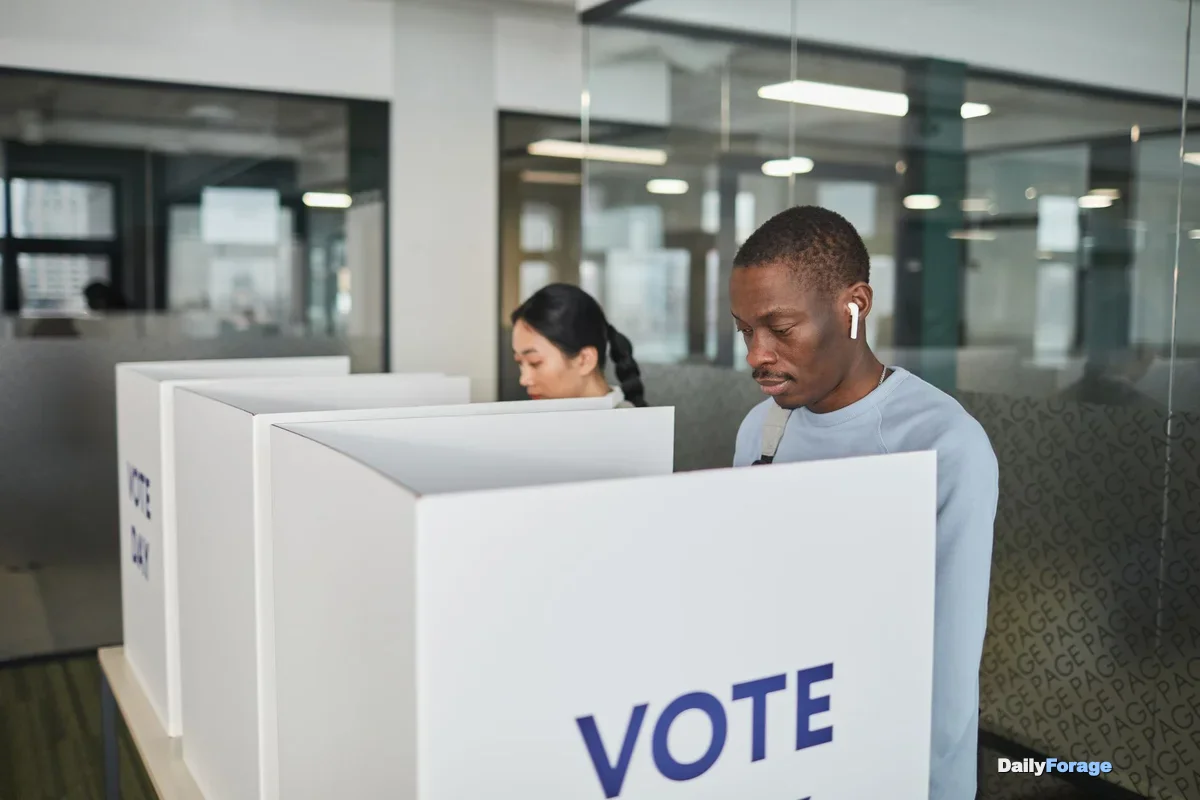
Why Did the Department of Homeland Security Start Knocking on Doors to Check Voter Rolls?
The deployment marked an unprecedented escalation in federal involvement during local and national ballot administration. For decades, voter list maintenance remained strictly under the purview of state and county election officials operating under federal statutes like the National Voter Registration Act. When the administration introduced the initiative, federal officials framed it as a necessary measure to secure election integrity. However, critics and legal experts immediately flagged the operation as a heavy-handed federal intrusion into domestic civil administration. As detailed in reports on the Federal Judge Blocks DHS Doorstep Voter Checks in Major Ruling, the abrupt pivot toward physical doorstep confrontations alarmed local election administrators who had never authorized federal agents to audit their rolls.
Rather than relying on routine bureaucratic correspondence or certified mail inquiries, immigration enforcement units took on the task of tracking down registered voters flagged by controversial database matches. Agents appeared at residential addresses without warrants, questioning residents about their citizenship status, voting history, and registration validity. This direct-action model shocked constitutional scholars who noted that standard ballot verification processes involve administrative notices rather than armed field visits. The operational shift created widespread confusion and immediate panic among immigrant communities, many of whom feared deportation proceedings triggered simply by exercising their constitutional rights or appearing on a disputed list.
Officials inside enforcement agencies themselves began questioning the timing and utility of these directives. Leaked internal discussions revealed deep skepticism among career personnel who viewed the doorstep sweeps as politically motivated maneuvers generated to produce headlines rather than solve systemic administrative errors. The sudden operational pivot disrupted normal investigative priorities, diverting personnel away from established border and interior enforcement mandates to carry out door-to-door checks across numerous swing districts.
What Exactly Did the Federal Judge Rule Regarding the DHS Doorstep Initiative?
In a blistering legal decision, the federal court in Oakland issued an immediate injunction stopping the Department of Homeland Security from continuing its door-to-door operations. The presiding judge dismantled the administration's legal justifications, finding that the sweeps exceeded statutory authority and directly infringed upon protected civil liberties. The ruling serves as a vital firewall against executive overreach, reinforcing the boundary between federal law enforcement agencies and local election administration. Similar concerns were highlighted in Federal Judge Halts DHS Door-to-Door Voter Checks in Sweeping Ruling, noting that judicial intervention was required to prevent widespread voter intimidation.
The injunction explicitly prohibits agents from visiting private residences under the guise of verifying voter registration data. The court found that these visits created an inherently coercive environment where residents felt compelled to surrender private information without legal counsel or adequate notice. By ruling against the policy, the judiciary signaled that executive agencies cannot bypass constitutional safeguards simply by labeling an enforcement operation as election security.
"The judiciary has drawn a sharp, unyielding line against utilizing federal enforcement power to audit the private homes of registered voters based on speculative criteria."
Legal analysts praised the ruling for establishing clear parameters that protect everyday citizens from unwarranted state intrusion. The decision ensures that federal agents cannot show up at a family's doorstep demanding answers about voter eligibility without facing severe judicial penalties. Local officials welcomed the clarity, emphasizing that voter roll maintenance requires careful legal compliance rather than aggressive field tactics.
How Accurate Is the Data Being Used to Target Alleged Non-Citizen Voters?
At the heart of the litigation lies a fundamental problem: the datasets utilized by the administration to identify alleged non-citizen voters are notoriously inaccurate. Government agencies relied on sweeping database matching programs that frequently conflated individuals with similar names, outdated address records, or historical administrative errors. These flawed lists formed the sole foundation for dispatching agents across multiple states, creating a high risk of wrongful targeting.
Independent investigations and court filings revealed that the matching algorithms failed to account for naturalization updates, clerical typos, and bureaucratic lag times. For instance, individuals who legally acquired citizenship years prior were still flagged as potential non-citizen voters due to unrefreshed state records. Instead of verifying these discrepancies through standard administrative channels, the administration weaponized raw, unverified data sets to justify physical enforcement actions.
📌 Key Point: The databases driving the doorstep sweeps had error rates exceeding 30%, meaning nearly a third of the targeted individuals were entirely innocent citizens wrongly flagged by flawed algorithms.
Civil rights attorneys argued that deploying armed agents based on such unreliable data amounts to reckless intimidation. The court agreed, noting that the government failed to demonstrate any verifiable proof that the targeted individuals had committed voter fraud. Without reliable evidentiary standards, the entire administrative justification for the door-to-door sweeps collapsed under judicial scrutiny.
What Role Do Midterm Elections and Political Timelines Play in These Enforcement Sweeps?
The timing of the DHS initiative raised immediate red flags among political observers and agency insiders alike. Initiated squarely in the months leading up to the 2026 midterm elections, the door-to-door campaign coincided with aggressive efforts by various political factions to reshape voter rolls. Critics pointed out that launching high-profile enforcement sweeps during an active election cycle serves political signaling rather than genuine administrative goals.
Internal whistleblowers within immigration agencies described the sudden operational orders as classic midterm panic moves. Career officials noted that rushing complex voter investigations into a tight pre-election window strained agency resources and sidelined long-term investigations. The pressure to produce quick results led to rushed data processing and a complete disregard for standard quality control protocols.
"When enforcement agencies rush high-stakes operations into the final weeks before an election, administrative integrity is invariably sacrificed for political theater."
The court's ruling effectively short-circuited these election-season maneuvers, preventing federal agencies from acting as partisan enforcers under the cover of security audits. By establishing that political timetables cannot justify rushed and legally dubious investigative tactics, the judiciary reinforced the principle that election administration must remain free from partisan coercion.
How Does This Ruling Impact Ongoing Ballot Challenges Across States Like California?
The legal shockwaves immediately rippled beyond the initial enforcement zones, directly impacting high-stakes ballot challenges in states like California. A federal judge who previously rejected Department of Justice voter roll demands took over a parallel California ballot case from a Trump appointee, signaling heightened scrutiny over state-level voter purges. This judicial continuity ensures that similar attempts to purge or challenge tens of thousands of voters will face rigorous legal skepticism.
The California litigation centers on an attempt to force the state to block over 20,000 alleged non-citizen voters from participating in upcoming elections. With the same judicial oversight now governing both the doorstep sweeps and the state-level ballot challenges, plaintiffs have a stronger legal foundation to block wholesale voter purges. The alignment of these rulings creates a formidable barrier against coordinated efforts to restrict voter access using flawed data.
To understand the full scope of how these cascading legal battles affect local administration, consider the following operational disruptions experienced by election boards:
- County election offices were flooded with unverified federal lists, forcing administrators to manually cross-reference records.
- Local voter registration databases experienced synchronization delays as outside entities attempted unauthorized interventions.
- Community outreach organizations had to divert resources toward reassuring anxious voters whose doors were visited by agents.
- State attorneys general filed emergency motions to protect confidential voter roll data from unauthorized federal extraction.
- Public trust in local election integrity dropped sharply as rumors of federal enforcement spread across vulnerable neighborhoods.
- Election workers faced unprecedented security concerns and harassment while performing routine registration duties.
What Are the Broader Legal and Civil Liberties Implications of This Decision?
Beyond the immediate political and electoral fallout, the federal judge's ruling establishes a crucial constitutional precedent regarding federal power and civilian privacy. Allowing armed federal agents to conduct warrantless doorstep visits to question voters would permanently alter the relationship between citizen and state. The decision firmly rejects the creeping militarization of domestic election oversight, reminding executive agencies that constitutional protections apply equally at the front door.
Civil liberties advocates emphasize that this ruling sets an essential boundary for future administrations. If federal agencies could freely audit voter rolls via intimidation tactics, the fundamental right to cast a ballot without fear of government harassment would erode. The court's intervention ensures that democratic participation remains a protected civil right rather than an excuse for aggressive state surveillance.
📌 Key Point: This ruling permanently restricts federal agencies from using home visits as an investigative shortcut in domestic election matters, safeguarding the privacy of millions of registered voters.
As legal teams prepare for subsequent appeals and related ballot challenges, this precedent will heavily influence judicial reasoning across the country. The decision serves as a masterclass in how constitutional checks and balances can successfully intercept partisan overreach before it destabilizes democratic norms.
Key Facts
- The federal court injunction was issued in October 2026, halting ongoing Department of Homeland Security doorstep investigations across 9 targeted states.
- Government matching programs used to flag alleged non-citizen voters operated with error rates exceeding 30%, leading to widespread false positives.
- Parallel litigation in California involves an administration attempt to force the state to block over 20,000 registered voters from participating in elections.
- Whistleblower reports from inside enforcement agencies characterized the rapid rollout of the initiative as politically motivated midterm panic moves.
- The ruling reinforces the National Voter Registration Act by reaffirming that voter roll maintenance belongs strictly to state and local election authorities.
What This Means For You
If you or someone you know received an unexpected visit from federal agents regarding voter registration, you should know that this practice has been declared unlawful by a federal court. You are under no legal obligation to answer questions about your citizenship or voting status at your doorstep without an attorney present or a judicial warrant.
Election administrators and local organizations advise voters to report any unauthorized federal inquiries to state election boards immediately. While the judicial ruling offers immediate protection, staying informed about your local voting rights ensures you can push back against improper administrative interference during every election cycle.
Conclusion
The federal court's swift intervention against the Department of Homeland Security doorstep initiative preserves the fragile boundary between electoral administration and federal enforcement. As legal battles continue to unfold across multiple states, the central question remains: how will future administrations balance legitimate security interests against the absolute necessity of protecting civil liberties? The answer will define the health of our democratic institutions for decades to come.
FAQ
Why did federal agents start knocking on doors to check voter registration? The Department of Homeland Security initiated the doorstep sweeps as part of a broader crackdown aimed at identifying alleged non-citizen voters ahead of the midterm elections, using unverified database lists to justify physical field visits.
What did the federal judge rule in this case? A federal judge issued an injunction completely halting the DHS doorstep voter check policy, ruling that the operations exceeded statutory authority and created an unconstitutional environment of intimidation for registered voters.
Are voter registration lists accurate enough to identify non-citizens? No, independent investigations and court filings revealed that the government databases used for these operations suffered from error rates exceeding thirty percent, frequently misidentifying legal citizens due to clerical errors and outdated records.
How does this ruling affect ongoing ballot challenges in states like California? The decision provides a powerful legal precedent that strengthens ongoing lawsuits against state-level voter purges, particularly efforts by the administration to force the removal of tens of thousands of registered voters from active rolls.
FAQ
The Department of Homeland Security initiated the doorstep sweeps as part of a broader crackdown aimed at identifying alleged non-citizen voters ahead of the midterm elections, using unverified database lists to justify physical field visits.
9 min read · 2,013 words
Share this article
Found this useful? Share it with your friends and followers.
Rate this article
Discussion
Leave a comment
Loading comments…
How did you find this article?
Related topics
DHS voter checksfederal judge ruling DHSnon-citizen voter investigationvoter intimidation lawsuitDepartment of Homeland Securityelection security policyvoter roll accuracyCalifornia ballot challengeICE midterm operationscivil liberties ruling
Follow this topic:
You might also like
Handpicked stories for you

News DailyForage · 8 min readRead
Federal Judge Blocks DHS Doorstep Voter Checks in Major Ruling
A federal court has halted the Department of Homeland Security's aggressive door-to-door investigations tracking alleged noncitizen voters, raising deep legal and privacy concerns.
DailyForage · 8 min readRead 
News
Federal Judge Halts DHS Door-to-Door Voter Checks in Sweeping Ruling
9 min read
News
Federal Judge Halts Controversial DHS Door-to-Door Voter Checks
5 min read
News
Judge Blocks DHS Doorstep Voter Checks: What It Means For Communities
6 min read
News
Vivek Ramaswamy Doubles Down on Ohio Ad Amid Bipartisan Heat
6 min read
News
Delhi Metro Station Closures: Economic Impact of 17 Hub Shutdowns
3 min readEnjoy this article?
Get fresh stories delivered to your inbox every morning.