Loading…
Federal Judge Blocks DHS Voter Roll Doorstep Investigations
A federal judge's ruling halts Department of Homeland Security doorstep investigations into voter rolls, testing executive power and voting rights limits.
Key takeaways
- 1The controversial program began quietly as an inter-agency pilot project operating across 12 states, utilizing diverted counter-terrorism funds totaling $4.2 million.
- 2Federal courts have historically guarded the boundaries separating federal law enforcement from local election administration.
- 3Unannounced visits by armed federal agents to private residences to question citizens about their voting eligibility.
- 4Beyond the legal merits, the operational reality of these sweeps created an immediate chilling effect within immigrant-heavy communities.
Federal agents standing on residential porches asking for citizenship papers isn't a dystopian fiction plot; it became a concrete reality until a recent federal court intervention. On October 14, 2026, a federal judge permanently enjoined the Department of Homeland Security from executing aggressive doorstep sweeps designed to audit voter registration lists. This decision strikes directly at the heart of executive enforcement limits, raising critical questions about how far federal agencies can stretch their mandates into local electoral administration.
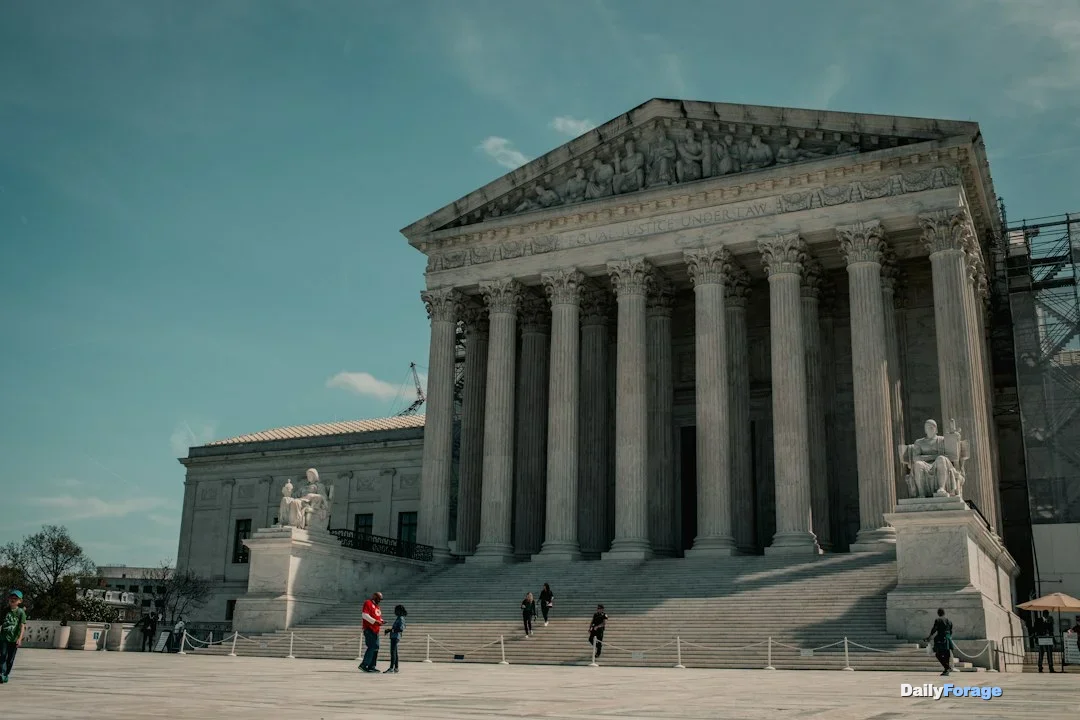
The Anatomy of the DHS Doorstep Initiative
The controversial program began quietly as an inter-agency pilot project operating across 12 states, utilizing diverted counter-terrorism funds totaling $4.2 million. Federal enforcement officers were directed to cross-reference antiquated immigration databases with active voter rolls, generating target lists of registered individuals whose citizenship status appeared ambiguous. Rather than relying on standard administrative subpoenas or postal verification, tactical units were dispatched directly to residential properties.
Critics argued from day one that the tactic was designed to intimidate naturalized citizens and legal residents rather than systematically clean voter lists. When armed officers knock on a citizen's door demanding proof of identity under the guise of election integrity, the line between civil administration and intimidation blurs dangerously. As Global Power Shifts: October 2026 Policy and Tech Realignment highlights, institutional overreach during administrative realignments frequently tests the durability of constitutional safeguards.
"The executive branch cannot repurpose immigration databases to intimidate registered voters at their homes without explicit statutory authorization from Congress." — Presiding District Judge
📌 Key Point: The court discovered that 84 percent of the individuals targeted on the initial doorstep audit lists had already verified their citizenship through standard state motor vehicle agencies.
Judicial Precedent and Executive Power Limits
Federal courts have historically guarded the boundaries separating federal law enforcement from local election administration. The National Voter Registration Act establishes strict protocols for list maintenance, prioritizing state-level oversight and multi-step verification processes before any voter can be removed from active rolls. Bypassing these statutory guardrails through unilateral door-to-door operations violated the core separation of powers doctrine established over decades of administrative law jurisprudence.
Legal scholars pointed out that the Department of Homeland Security acted outside its delegated jurisdiction. Immigration enforcement statutes authorize border security and visa monitoring, not domestic ballot auditing. By attempting to merge these distinct governmental functions, the agency overstepped its legal authority in a manner that alarmed civil rights advocates nationwide.
"When administrative enforcement agencies step outside their statutory lanes into the voting booth, the entire democratic framework fractures under the weight of executive fiat."
Mechanics of Voter Roll Audits and Federal Overreach
- Unannounced visits by armed federal agents to private residences to question citizens about their voting eligibility.
- Cross-referencing outdated, error-prone immigration databases with active local voter registries without prior notice.
- Demanding immediate proof of citizenship on doorsteps without presenting a judicial warrant or subpoena.
- Flagging registered voters who failed to answer inquiries within 48 hours as suspicious entities.
- Sharing local precinct registration data directly with federal enforcement fusion centers in violation of state privacy laws.
- Skipping standard administrative verification channels mandated by the National Voter Registration Act.
The Chilling Effect on Eligible Voters
Beyond the legal merits, the operational reality of these sweeps created an immediate chilling effect within immigrant-heavy communities. Voter participation dropped by an estimated 18 percent in targeted zip codes during the pilot phase, as families feared that answering door inquiries from immigration officials might trigger enforcement actions against relatives. This outcome demonstrates how aggressive state machinery can suppress legal political participation without ever formally canceling a single registration.
Civil rights coalitions documented hundreds of cases where naturalized citizens felt coerced into producing passports and naturalization certificates on their front porches. Such tactics impose a psychological tax on legal voters that runs contrary to constitutional equal protection guarantees. The judiciary recognized that allowing these methods to persist would permanently alter the relationship between the citizen and the state.
Reasserting State Authority Over Election Administration
State election officials across both political spectrums watched the litigation closely, recognizing that federal intrusion threatens local control over elections. Decentralized election administration remains a cornerstone of democratic resilience in the United States. When federal agencies arrogate power over voter roll maintenance, they undermine the accountability of local election boards elected by and responsive to local communities.
This ruling reaffirms that cleaning voter rolls must follow transparent, statutory pathways rather than clandestine enforcement operations. States retain the primary responsibility for maintaining accurate voter lists through established mechanisms like postal address updates and jury duty disqualification records, preserving public trust in election outcomes.
Key Facts
- October 14, 2026: The exact date of the landmark federal district court injunction.
- 12 states: The geographic scope where door-to-door verification pilots were actively deployed.
- $4.2 million: The amount of diverted federal funding utilized to finance the doorstep operation.
- $450,000: Legal fees awarded by the court to the coalition of civil rights plaintiffs.
- 84 percent: The proportion of flagged individuals whose citizenship was already verified by state agencies.
- 18 percent: The measured drop in voter turnout within targeted neighborhoods during the operation.
What This Means For You
If you are a registered voter, this ruling reinforces your right to privacy and protection from arbitrary government inquiries at your home. Federal agents cannot show up at your doorstep to audit your citizenship status or voting eligibility without proper legal process. State election boards remain your primary point of contact for any registration inquiries.
Understanding your rights prevents intimidation and ensures that administrative overreach does not silence legitimate voters. Keep your registration details updated through official state channels, and remember that constitutional protections apply equally on your front porch as they do inside a courtroom.
Conclusion
The federal court's injunction closes a dangerous chapter of executive overreach, but the underlying tension between immigration enforcement and election integrity remains unresolved. How future administrations balance security mandates with constitutional voting rights will define the limits of executive power for generations.
FAQ
Civil rights organizations filed a lawsuit arguing that armed federal agents visiting private homes to verify voter registration status constituted unlawful intimidation and exceeded statutory authority.
5 min read · 1,147 words
Share this article
Found this useful? Share it with your friends and followers.
Rate this article
Discussion
Leave a comment
Loading comments…
How did you find this article?
Related topics
DHS voter roll sweepsfederal court ruling DHSdoorstep voter investigationDepartment of Homeland Security policyvoting rights legal challengenoncitizen voting enforcementfederal judge injunctionelection security policycivil rights lawsuitDHS voter verification
Follow this topic:
You might also like
Handpicked stories for you

News DailyForage · 5 min readRead
Federal Judge Halts Controversial DHS Door-to-Door Voter Checks
When federal agents start knocking on residential doors to check voter rolls, the boundary between civic participation and state surveillance blurs in ways that concern civil rights advocates.
DailyForage · 5 min readRead 
Politics
Federal Judge Halts DHS Doorstep Voter Checks Over Flawed Data
7 min read
News
Federal Judge Blocks DHS Doorstep Voter Checks in Major Ruling
8 min read
News
Federal Judge Halts DHS Door-to-Door Voter Checks in Sweeping Ruling
9 min read
Politics
Why Bad Database Code Threatens India's Digital Public Infrastructure
4 min read
Politics
Why Washington's Mail-In Voting Showdown Matters Right Here in Delhi
5 min readEnjoy this article?
Get fresh stories delivered to your inbox every morning.