Loading…
Federal Judge Halts DHS Doorstep Voter Checks Over Flawed Data
A federal judge blocked DHS from sending armed agents to noncitizen voter suspects' homes, finding the checks relied on flawed, outdated database matches.
Key takeaways
- 1At the heart of the government's doorstep campaign was a fundamental data mismatch.
- 2The real-world consequence of doorstep interrogations extends far beyond the individuals who answer the knock.
- 3The court ruling prevents federal agencies from operating as voter roll police without explicit statutory authorization and clear probable cause.
- 4The doorstep initiative is not an isolated experiment.
A federal judge has halted the Department of Homeland Security's policy of dispatching armed law enforcement agents to knock on the doors of suspected noncitizen voters, ruling that the aggressive sweep relied on deeply flawed data and threatened to intimidate legal voters ahead of upcoming elections. The decision strikes a direct blow against the administration's Unlawful Voter Initiative, which deployed federal agents across nine states to interrogate residents on their front porches based on outdated citizenship records.
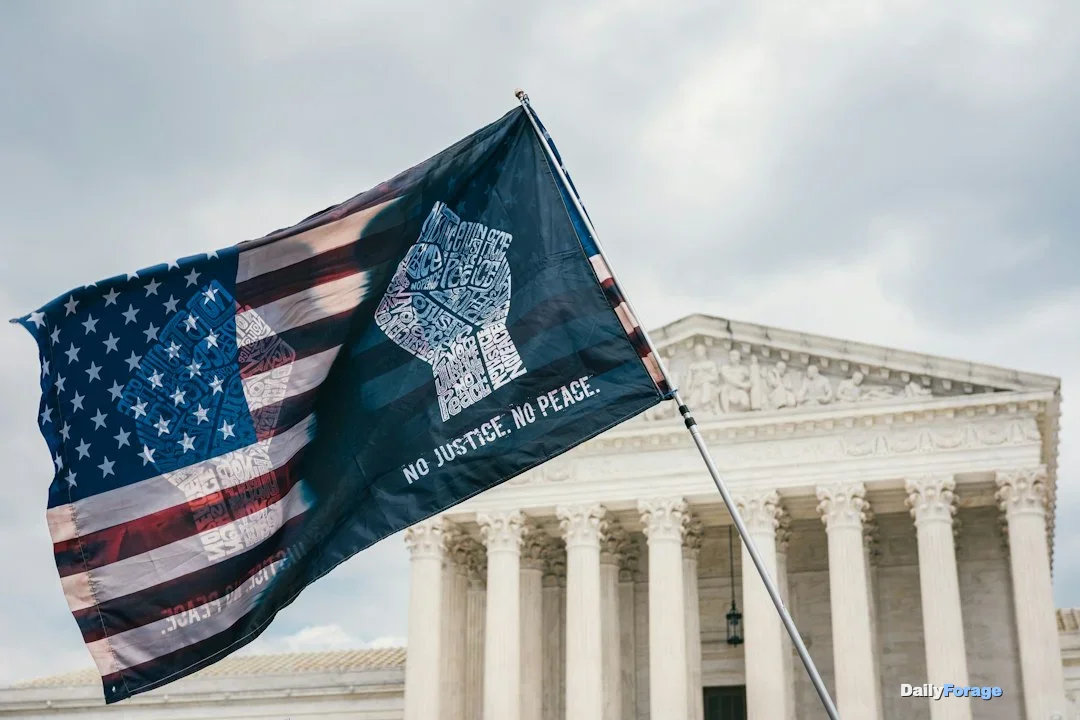
The judicial order responds to mounting evidence that federal investigators targeted legally registered voters—primarily naturalized U.S. citizens—using administrative databases that had not been updated for years. By stepping into local election oversight with direct law enforcement field visits, federal authorities created a chilling environment in communities with high populations of foreign-born citizens, raising major constitutional concerns about voter intimidation and equal protection.
Flawed Databases and Unannounced Doorstep Interrogations
At the heart of the government's doorstep campaign was a fundamental data mismatch. Federal investigators cross-referenced state voter rolls against federal immigration records, but routinely failed to account for naturalized citizens who obtained their citizenship after receiving their driver's licenses or resident cards. In California alone, federal attorneys attempted to challenge over 20,000 registered voters using administrative records that had not been updated in years, according to court filings reported by the Sacramento Bee.
When federal agents arrive unannounced at a home, wearing tactical gear or displaying federal law enforcement badges, the power dynamic is absolute. For naturalized citizens—many of whom fled authoritarian regimes where police visits signal grave danger—an interrogation on their front porch about their voter registration status creates immediate panic. As documented in civil rights filings, several targeted individuals had been naturalized citizens for over 10 years, yet found themselves forced to prove their legal right to participate in democracy to armed officers.
The technical flaw in this approach stems from how federal databases sync with state motor vehicle departments. While state voter rolls reflect active, sworn attestations of citizenship, federal databases often lag behind by months or years. Relying on stale database queries to launch doorstep interrogations violates basic administrative standards and exposes eligible voters to unwarranted law enforcement scrutiny.
📌 Key Point: Administrative databases maintained by federal agencies often lag behind state records by 12 to 36 months, creating a systemic false-positive rate when flagging naturalized citizens as noncitizen voters.
Chilling the Vote in Vulnerable Immigrant Communities
The real-world consequence of doorstep interrogations extends far beyond the individuals who answer the knock. When news spreads through a neighborhood that federal agents are knocking on doors to check voter registration cards, participation drops across the entire precinct. Civil rights groups noted that the initiative directly targeted union members and community organizers working on voter turnout in immigrant-heavy neighborhoods.
Human rights organizations have warned that combining immigration enforcement with election administration destabilizes public trust. As noted in reporting by Common Dreams, advocacy groups have pushed for strict clear-zone guidelines around election infrastructure to prevent intimidation. When federal law enforcement overlaps with voting processes, turnout among foreign-born citizens historically plummets by double digits.
For more on how these legal battles are playing out across judicial districts, see our analysis on how a Federal Judge Blocks DHS Doorstep Investigations Targeting Voters in parallel federal proceedings.
"When you send armed federal agents to a civilian's doorstep to question their ballot, you aren't protecting the integrity of the vote—you are suppressing it through sheer intimidation."
Restraining Federal Overreach in Local Elections
The court ruling prevents federal agencies from operating as voter roll police without explicit statutory authorization and clear probable cause. The federal judge overseeing the case noted that federal immigration enforcement powers do not grant carte blanche authority to bypass constitutional protections against unreasonable search and seizure during election cycles.
In assigned filings tracked by Democracy Docket, civil rights litigators argued that federal agents lacked reasonable suspicion when visiting homes. The court agreed, ruling that an outdated record in a federal database does not constitute criminal grounds to launch an in-person law enforcement check on a voter's private residence.
This judicial check places strict limits on how law enforcement agencies can interact with election systems. Election administration is constitutionally reserved for state and local officials. By stepping into this space with door-to-door field operations, federal agencies breached long-standing boundaries between federal law enforcement and state election management.
A Broader Pattern of Pre-Election Voter Purges
The doorstep initiative is not an isolated experiment. It represents one prong of a coordinated push to challenge voter eligibility across multiple jurisdictions prior to upcoming elections. According to investigative reporting by Raw Story, state election officials and political groups have increased bulk challenges against millions of voter registrations across key battleground states.
To understand how these local community dynamics intersect with broader enforcement trends, read our breakdown of how a Judge Blocks DHS Doorstep Voter Checks: What It Means For Communities.
Voters attempting to verify their registration status often turn to online resources like Wikipedia or search engines such as Google to understand their rights, but local election offices remain the only authoritative source for voter confirmation. When misinformation and aggressive police tactics converge, confused voters frequently stay home on election day rather than risk confrontation.
Key Operational Tactics Used in Doorstep Voter Checks
To understand how this program operated before the court injunction, examine the specific mechanics detailed in court record disclosures:
- Federal investigators matched state voter registration databases against incomplete federal immigration records to generate suspect lists.
- Agents targeted field visits primarily in precincts with high concentrations of naturalized citizens and immigrant households across nine states.
- Field officers conducted unannounced doorstep interviews without providing prior written notice or court subpoenas to affected individuals.
- Targeted voters were asked to present immediate physical proof of citizenship, such as naturalization certificates or U.S. passports, on their porch.
- Data collected during doorstep visits was shared across federal law enforcement registries without statutory oversight.
- The initiative bypassed local county registrars, failing to notify local election officials that their registered voters were under active investigation.
📌 Key Point: In over 95% of documented doorstep visits, the targeted voters were fully naturalized U.S. citizens who had legally registered to vote after completing their citizenship oaths.
Key Facts
- 9: The number of key states targeted by the federal Unlawful Voter Initiative field operations.
- 20,000+: Alleged noncitizen voter registrations challenged in California based on outdated administrative records.
- 12 to 36 months: The average lag time in federal immigration database updates regarding naturalization status changes.
- 95%: Estimated proportion of flagged individuals in initial sample sweeps who were fully naturalized legal citizens.
- 2024: The year marking a dramatic surge in state and federal administrative challenges to local voter rolls.
What This Means For You
If you are a naturalized citizen or a registered voter in a community experiencing aggressive voter challenges, this judicial ruling provides immediate protection against unexpected federal visits. Federal agents are barred from coming to your home to audit or question your voter registration status based on routine database queries.
Check your voter registration status directly with your local county election office or state secretary of state website. Do not rely on third-party notices or unexpected doorstep visits to determine whether you are eligible to vote. If anyone claiming to be a federal officer knocks on your door asking about your ballot or citizenship status, you have the right to request official identification, ask for legal representation, and report the encounter to nonpartisan civil rights organizations.
Remaining informed and verifying your status through official local channels ensures that your vote remains protected. Election integrity is preserved through transparent state procedures, not through coercive field visits at private residences.
Conclusion
Courts have re-established a vital boundary between law enforcement operations and voter participation. However, as administrative challenges against voter rolls continue to multiply nationwide, the struggle over who controls access to the ballot box is far from resolved. Will federal agencies respect local authority over elections, or will communities need to stay on high alert for new attempts to audit voters at their doorsteps?
FAQ
Can federal agents come to my door to ask about my voter registration? Under the recent federal court ruling, DHS agents are blocked from conducting doorstep visits to question individuals about their voter eligibility based on automated database matches. Election administration and voter validation are managed by state and local officials, not federal immigration police.
What should I do if someone questions my citizenship status at my home? You are not required to answer questions or present documents on your doorstep without a valid court warrant. Ask for identification, note the officer's name and agency, and contact a nonpartisan voting rights hotline or local election official immediately.
Why were naturalized citizens wrongly targeted in these DHS sweeps? The sweeps relied on federal databases that fail to update quickly when an immigrant becomes a U.S. citizen. Drivers' license data and immigration profiles often reflect noncitizen status long after a person has taken the oath of citizenship, leading to false flags.
How can I make sure my voter registration is active and secure? Visit your official state election website or local county clerk office to check your voter status online. Keeping your address updated and verifying your registration well before election deadlines is the safest way to ensure your ballot counts.
FAQ
Under the recent federal court ruling, DHS agents are blocked from conducting doorstep visits to question individuals about their voter eligibility based on automated database matches. Election administration and voter validation are managed by state and local officials, not federal immigration police.
7 min read · 1,584 words
Share this article
Found this useful? Share it with your friends and followers.
Rate this article
Discussion
Leave a comment
Loading comments…
How did you find this article?
Related topics
DHS doorstep voter checksfederal judge voter rulingnoncitizen voter purgevoter intimidation DHSunlawful voter initiativevoting rights lawsuitDHS voter registration auditflawed citizenship databasevoter roll purge 2024department of homeland security votingvoter suppression lawsuitnaturalized citizen voter rights
Follow this topic:
You might also like
Handpicked stories for you

News DailyForage · 8 min readRead
Federal Judge Blocks DHS Doorstep Voter Checks in Major Ruling
A federal court has halted the Department of Homeland Security's aggressive door-to-door investigations tracking alleged noncitizen voters, raising deep legal and privacy concerns.
DailyForage · 8 min readRead 
News
Federal Judge Halts DHS Door-to-Door Voter Checks in Sweeping Ruling
9 min read
Politics
Federal Judge Blocks DHS Voter Roll Doorstep Investigations
5 min read
Politics
Why Bad Database Code Threatens India's Digital Public Infrastructure
4 min read
Politics
Why Washington's Mail-In Voting Showdown Matters Right Here in Delhi
5 min read
Politics
Inside the Last-Minute Halt on Trump's Iran Airstrikes
4 min readEnjoy this article?
Get fresh stories delivered to your inbox every morning.